Opportunity Zone Prospectus
A 48-page investor guide for Riverside County—translating federal Opportunity Zone policy into place-based data, focus-area profiles, and a clear path from capital gains to community impact.


The brief
Created by the 2017 Tax Cuts and Jobs Act, Opportunity Zones offered a new federal incentive: investors could roll capital gains into Qualified Opportunity Funds and deploy that capital into designated low-income communities—deferring taxes, reducing liability, and potentially eliminating gains on long-term OZ investments.
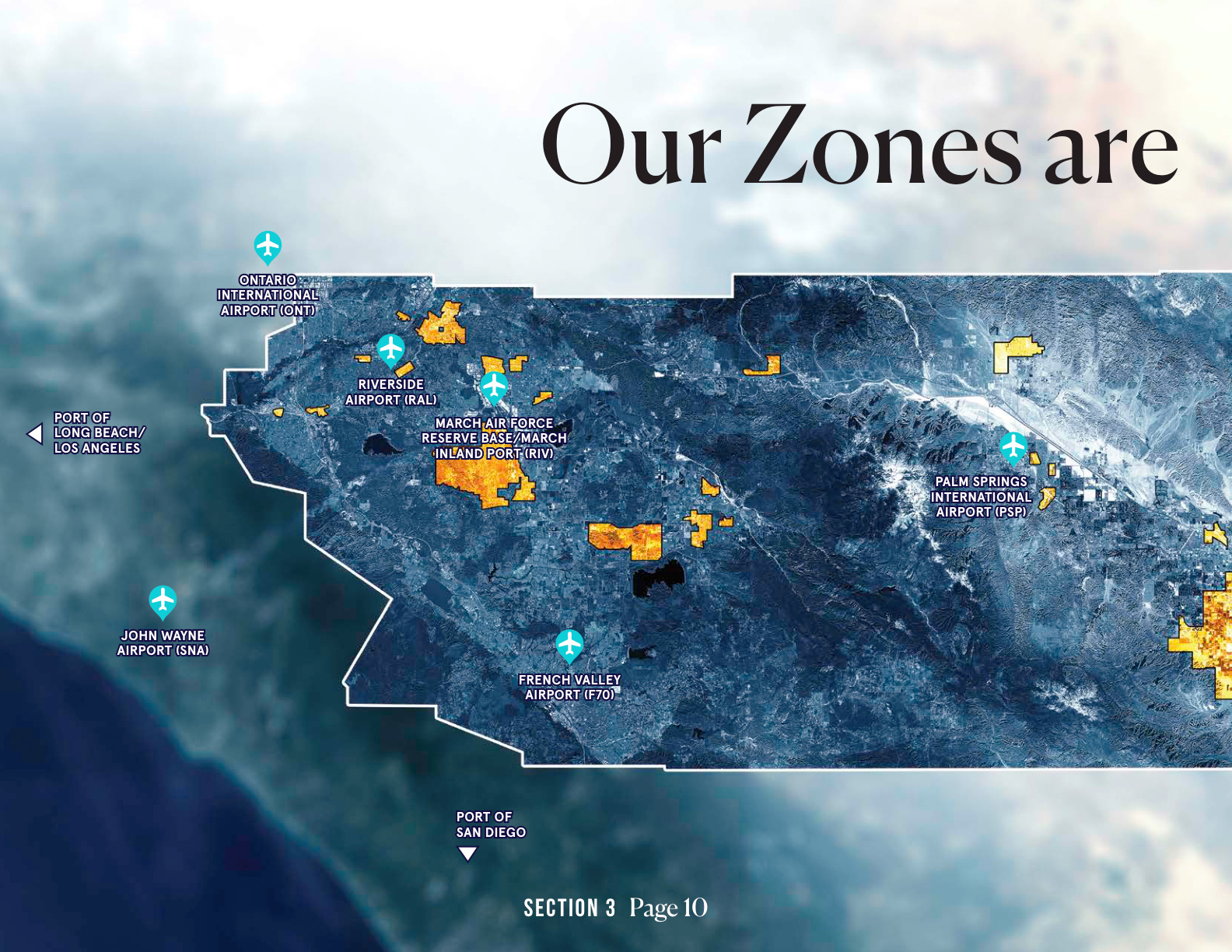
Riverside County needed a prospectus that did more than explain the statute. The Office of Economic Development required a polished, print-ready document that would educate investors on program mechanics, map every county zone against regional infrastructure, articulate investment priorities, and profile nine unincorporated focus areas with the demographic and retail-leakage data developers actually use.
Geogram designed and produced the full 48-page Opportunity Zone Prospectus, supported by RivCoOZ.com and Riverside County Business & Community Services.
Riverside County by the numbers
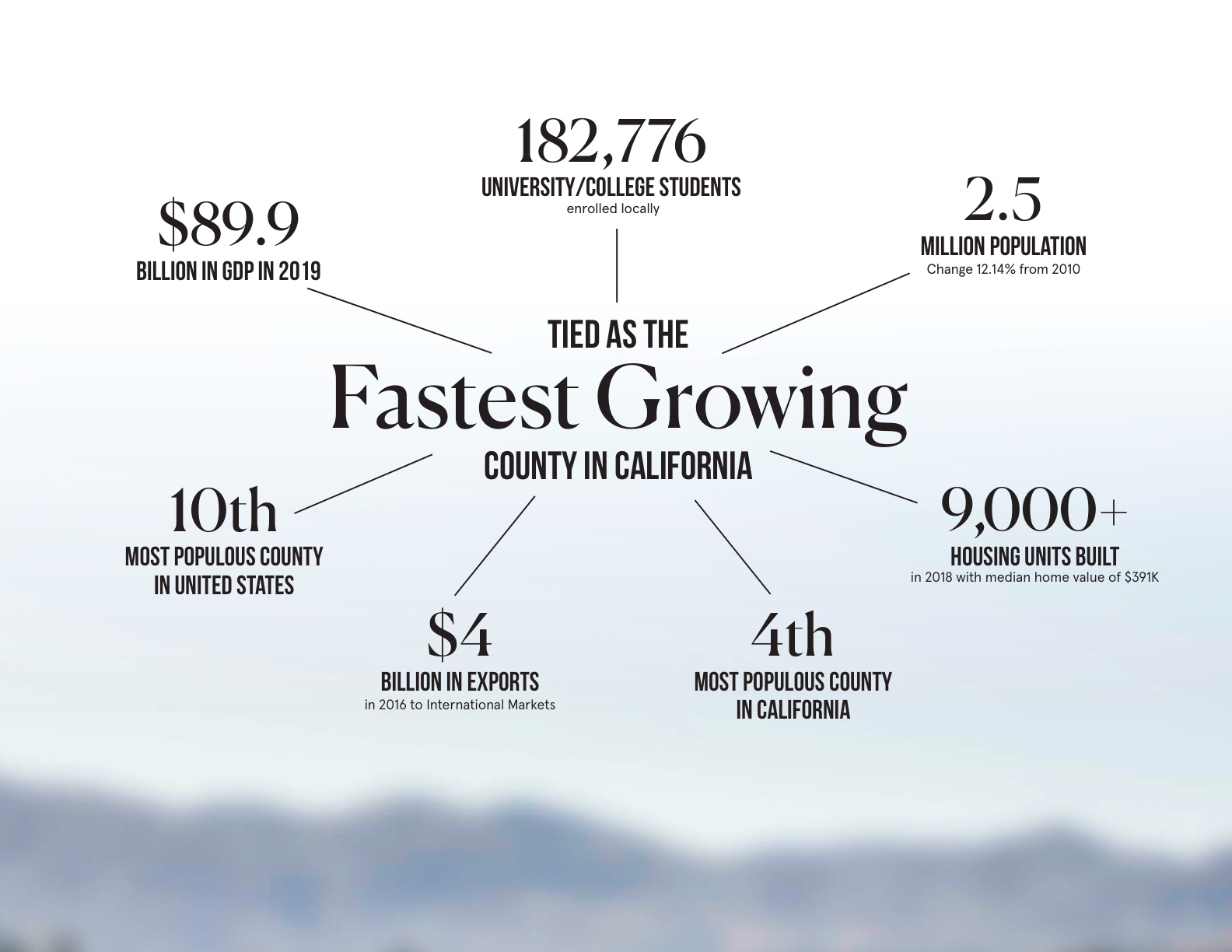
The prospectus opens with proof that the county is already on an upward trajectory—not a market investors need to invent from scratch.
Opportunity Zones explained
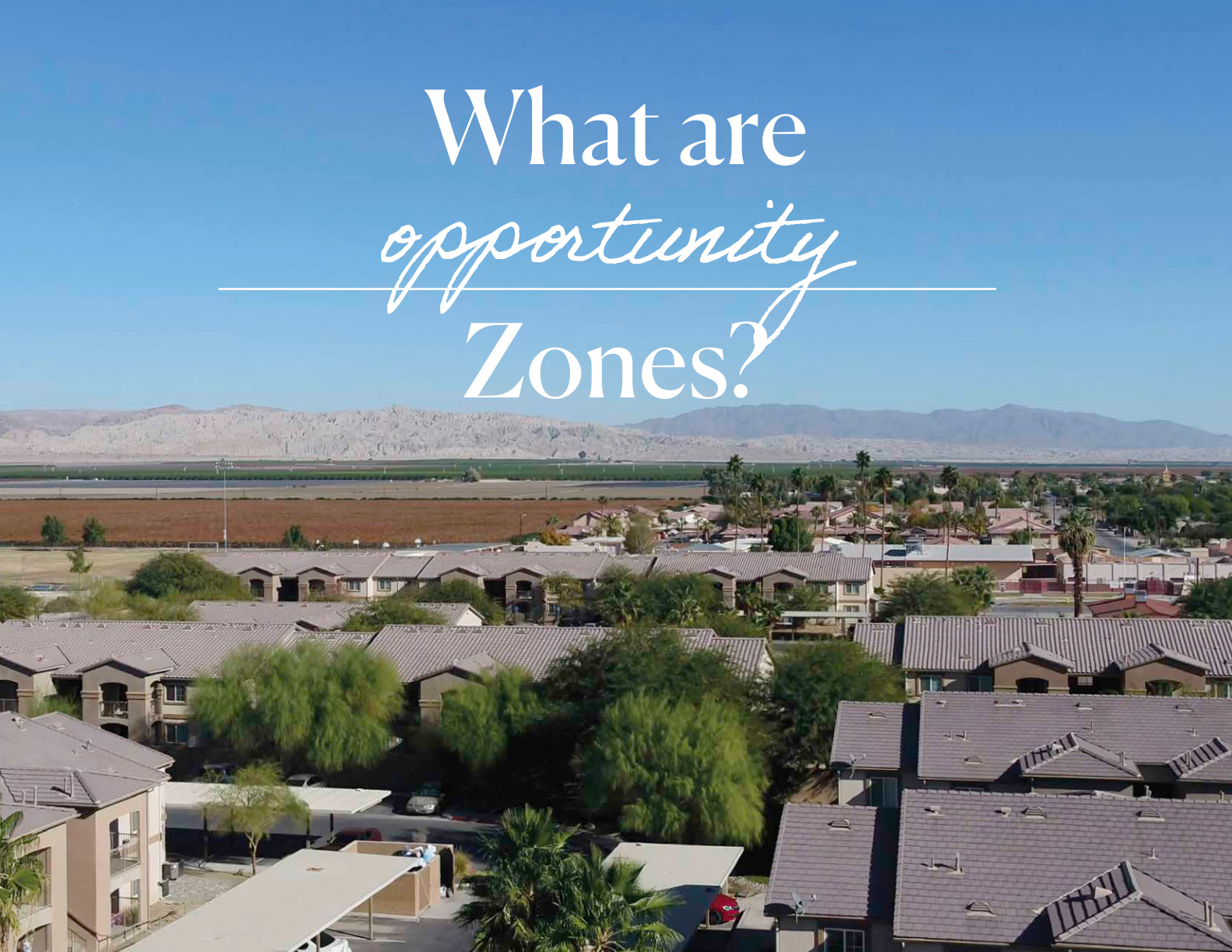
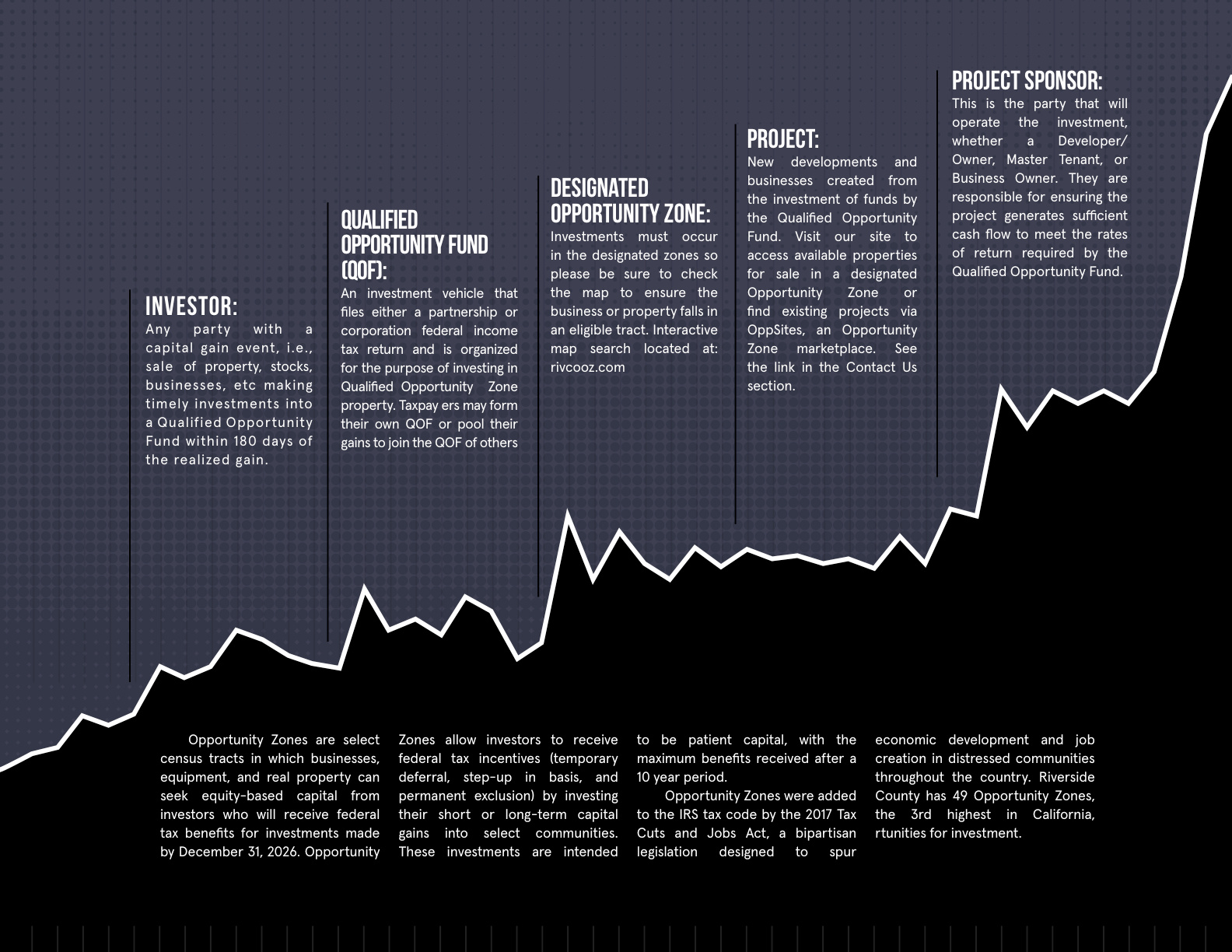
The middle chapters walk investors through the program architecture—who qualifies, what can be invested, and how the tax benefits stack over time.
- Qualified Opportunity Funds — investment vehicles that deploy at least 90% of assets into designated zones through equity, partnership interests, or business property.
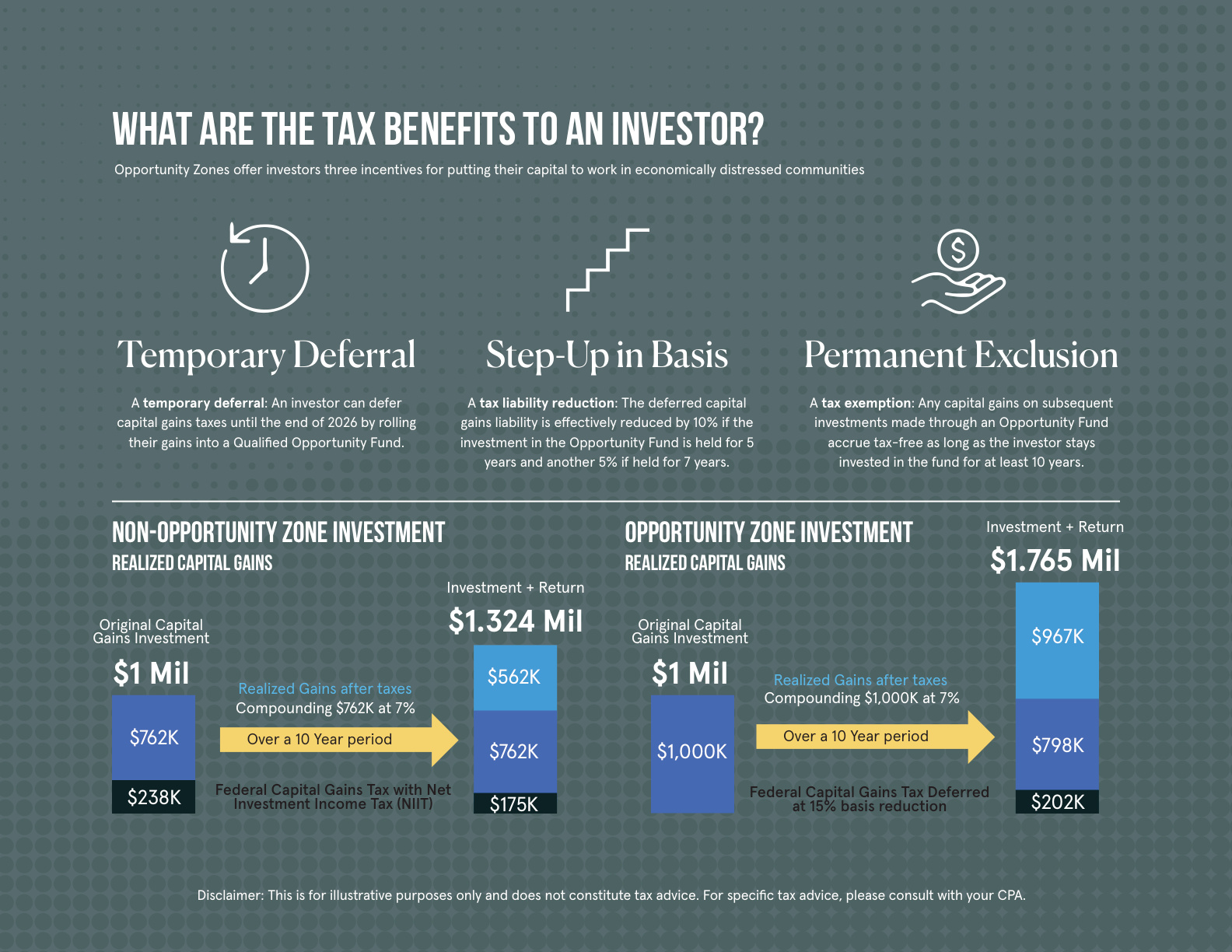
- Temporary deferral — capital gains rolled into a QOF within 180 days can be deferred until the end of 2026.
- Step-up in basis — a 10% reduction in deferred gains liability for investments held five years; 15% at seven years.
- Permanent exclusion — appreciation on long-held OZ investments can be excluded from capital gains tax after 10 years.
Investment priorities
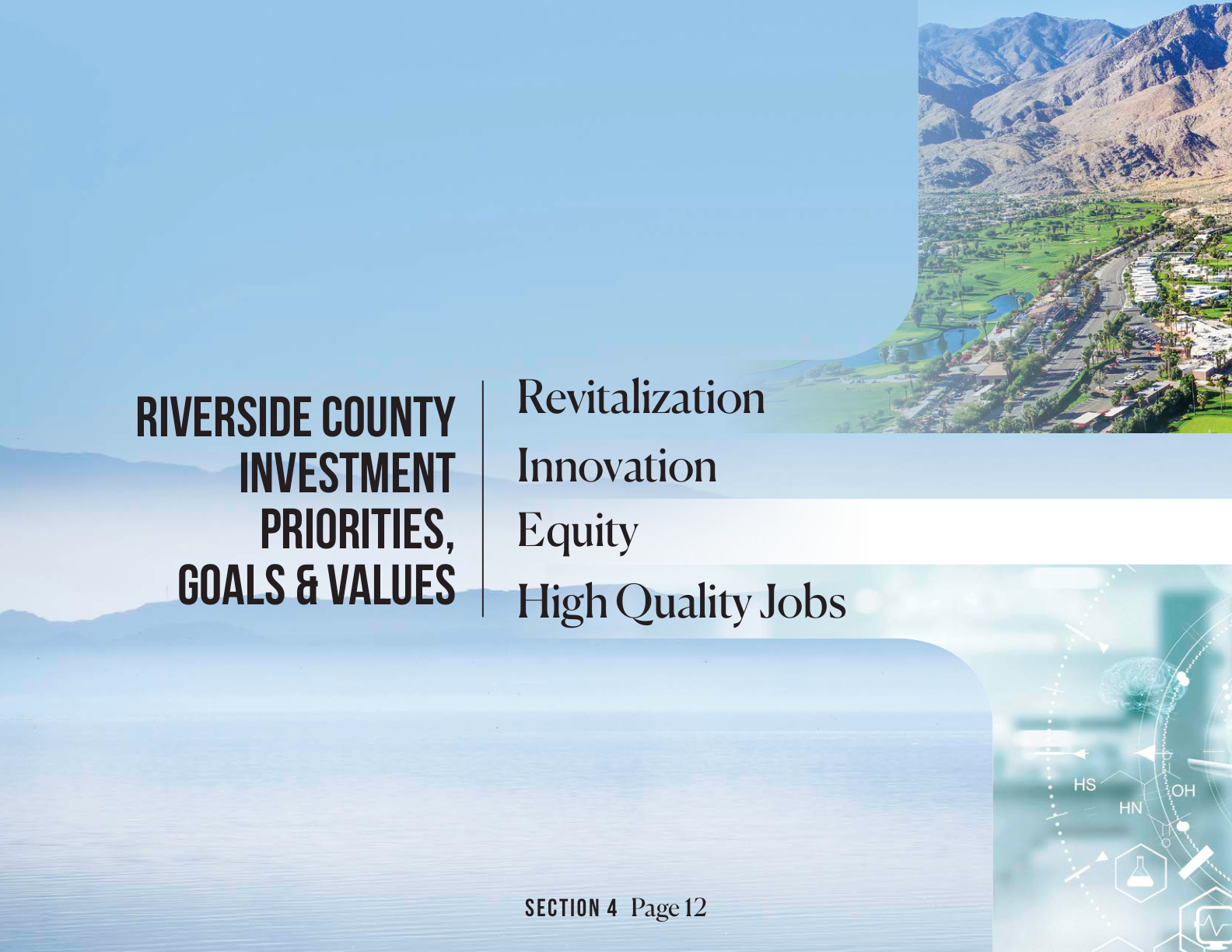
Riverside County framed its Opportunity Zone strategy around four pillars—ensuring capital deployment aligns with community outcomes, not just investor returns.
- Equity — investments and partnerships with businesses owned or led by people of color and women to create community wealth.
- Innovation — social, technological, and sustainable growth across emerging sectors.
- High-quality jobs — priority hiring of locally based talent.
- Revitalization — neighborhood-serving businesses and renewal of existing commercial districts.
Why Riverside County
Beyond tax mechanics, the prospectus makes the case for the county itself—cleantech leadership, world-scale solar, CARB’s $500 million Southern California headquarters, a workforce exceeding 1.1 million, and higher-education depth anchored by UCR.


Focus-area profiles
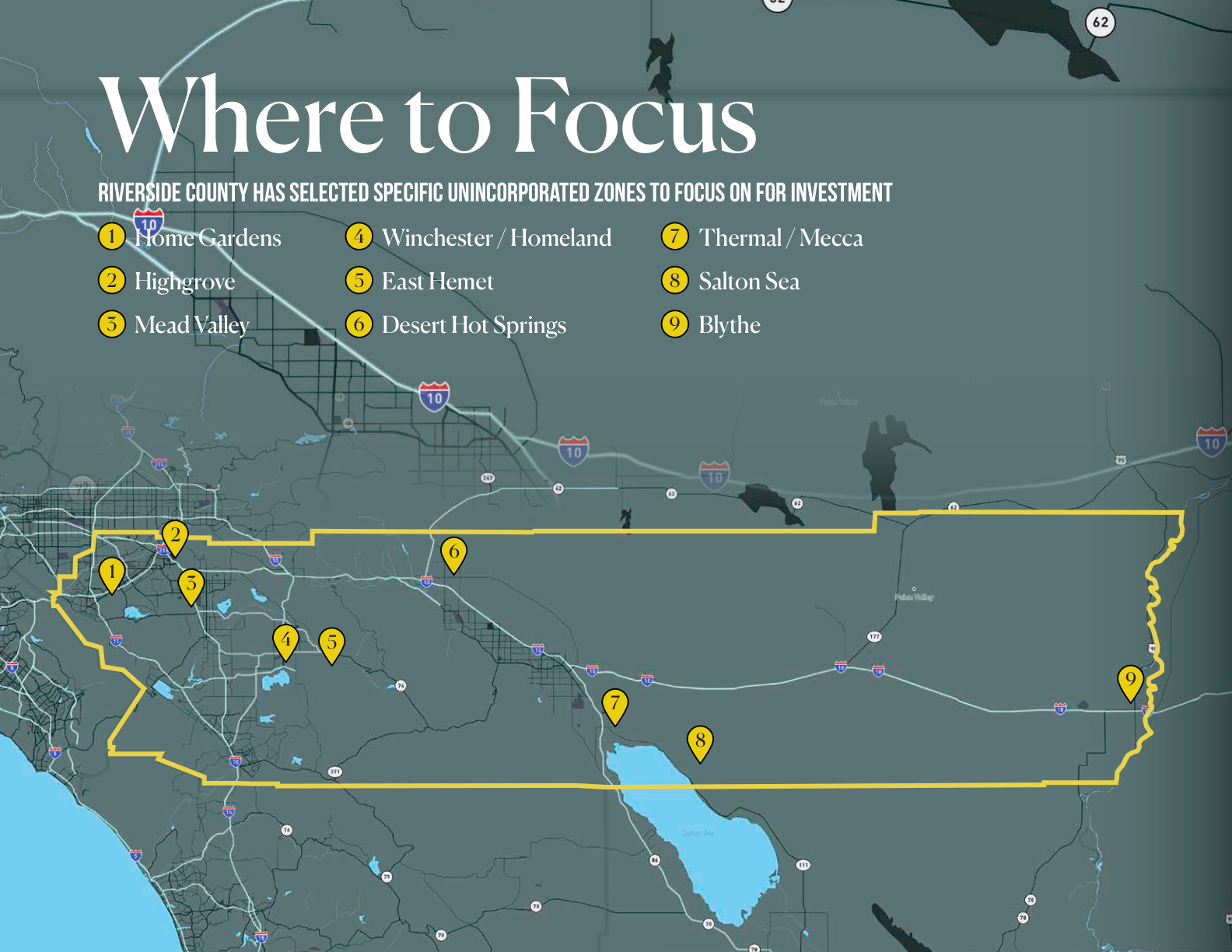
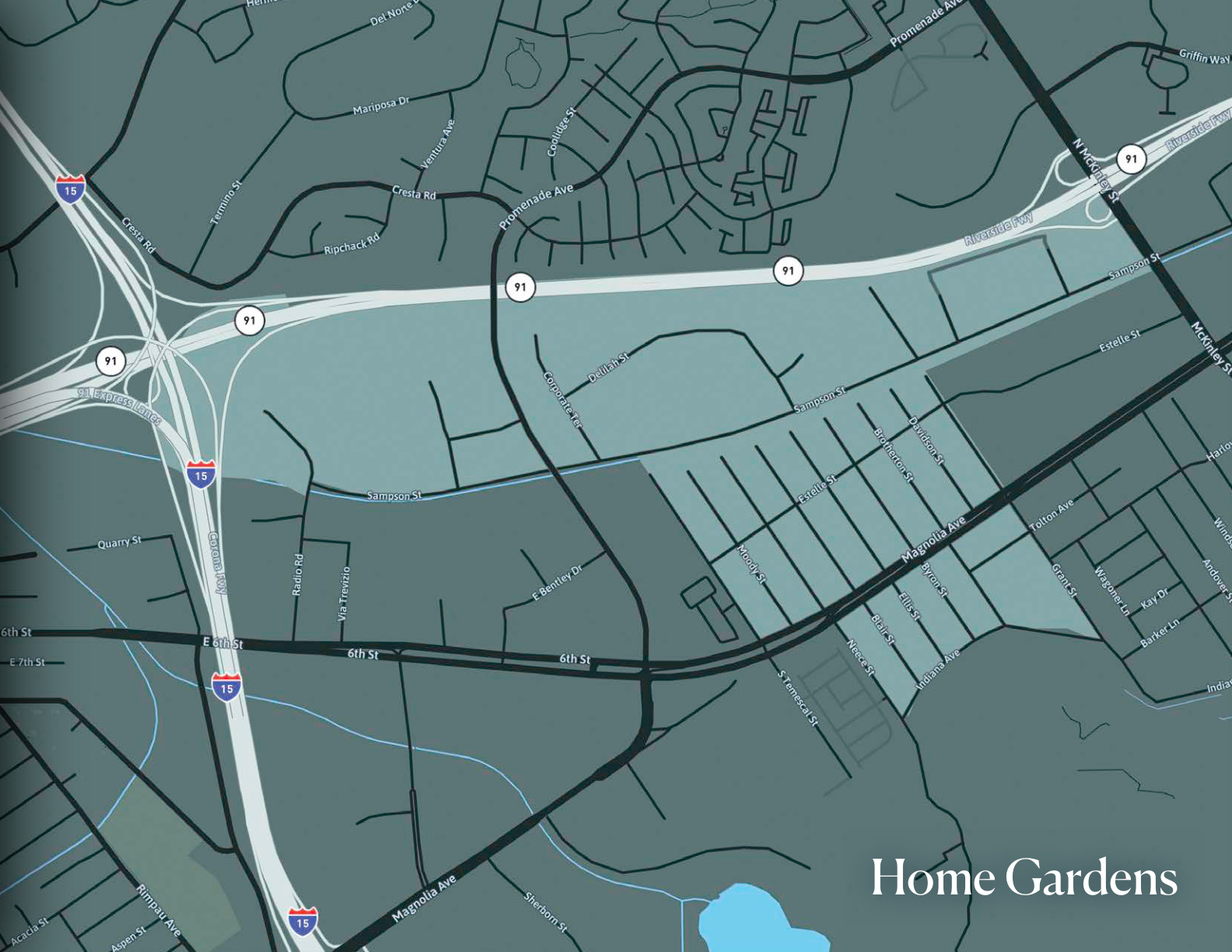
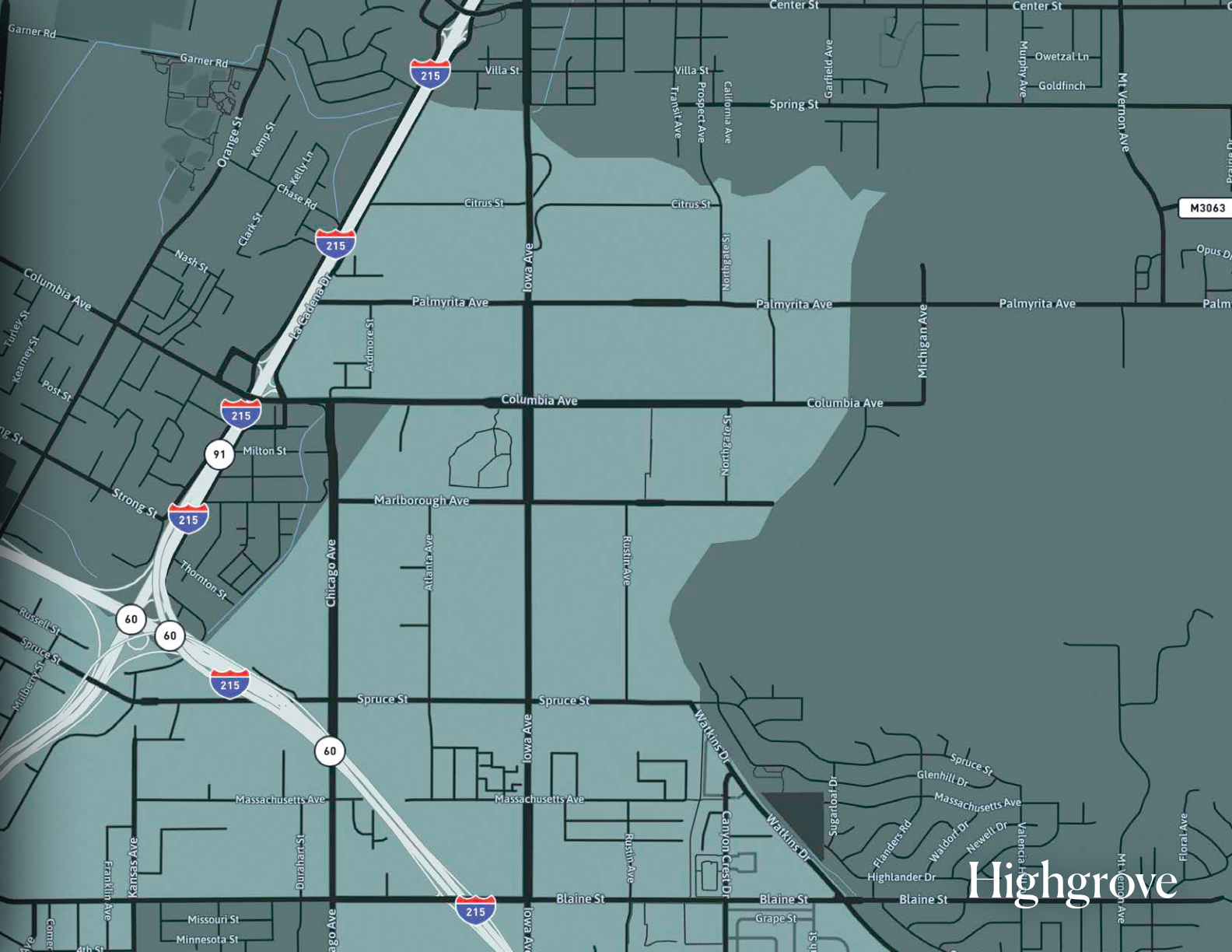
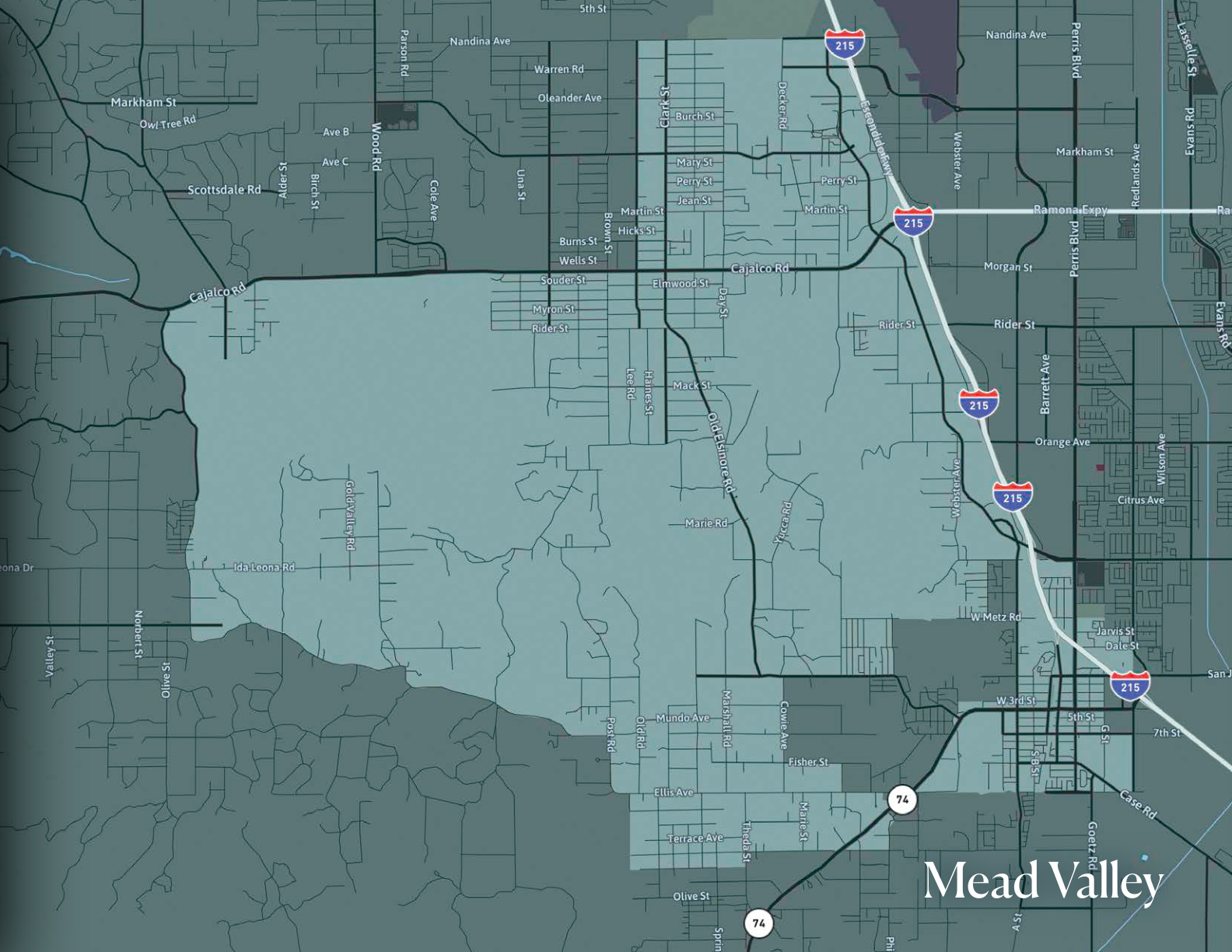
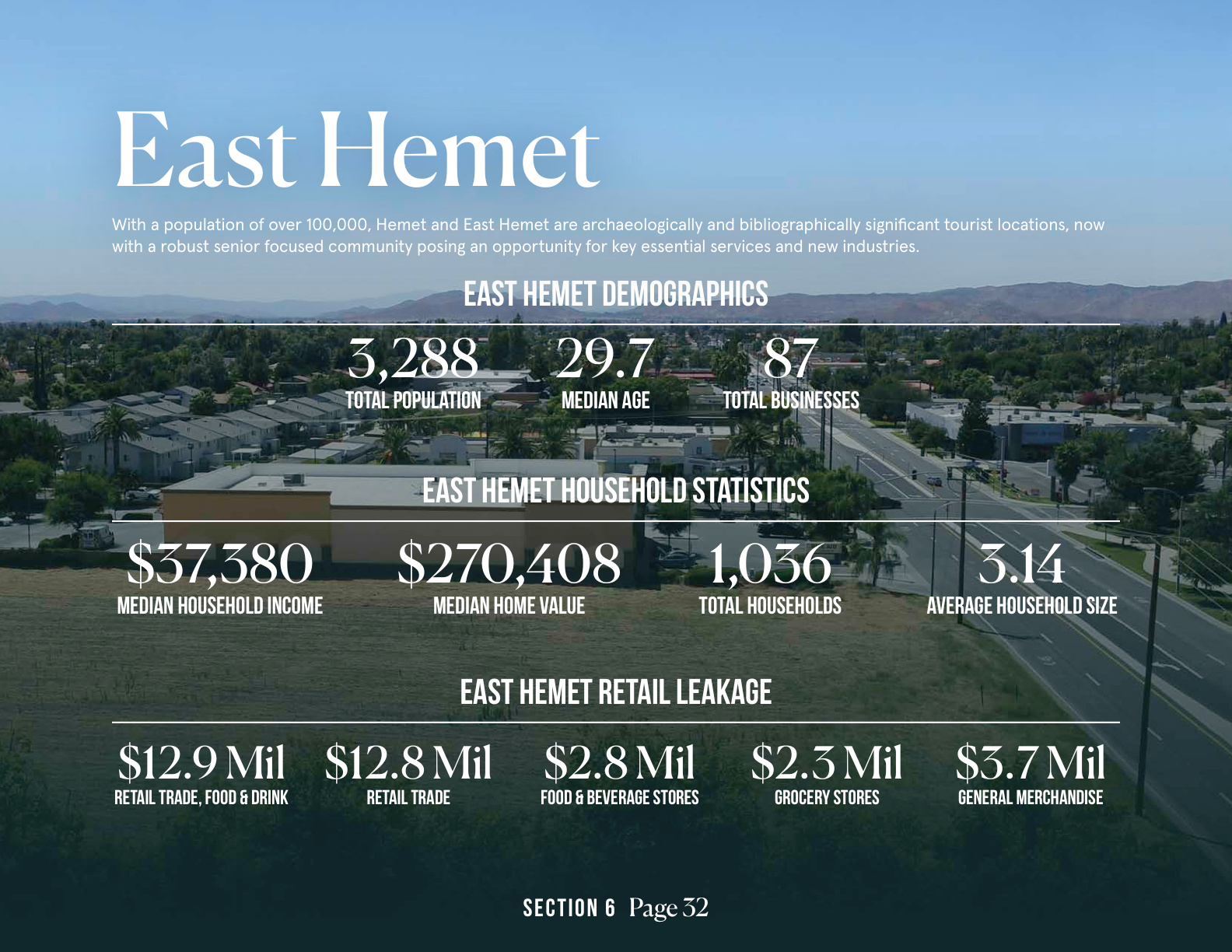
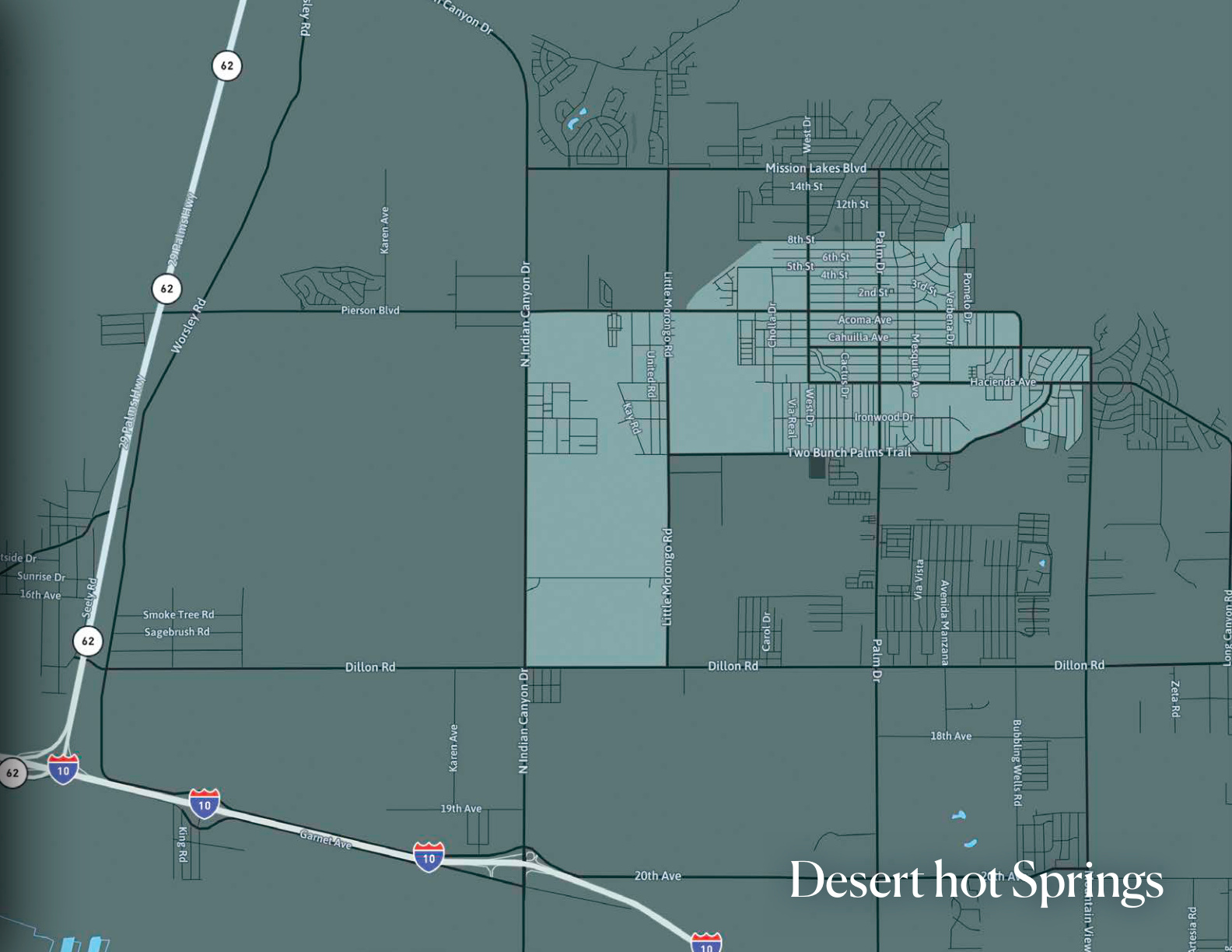
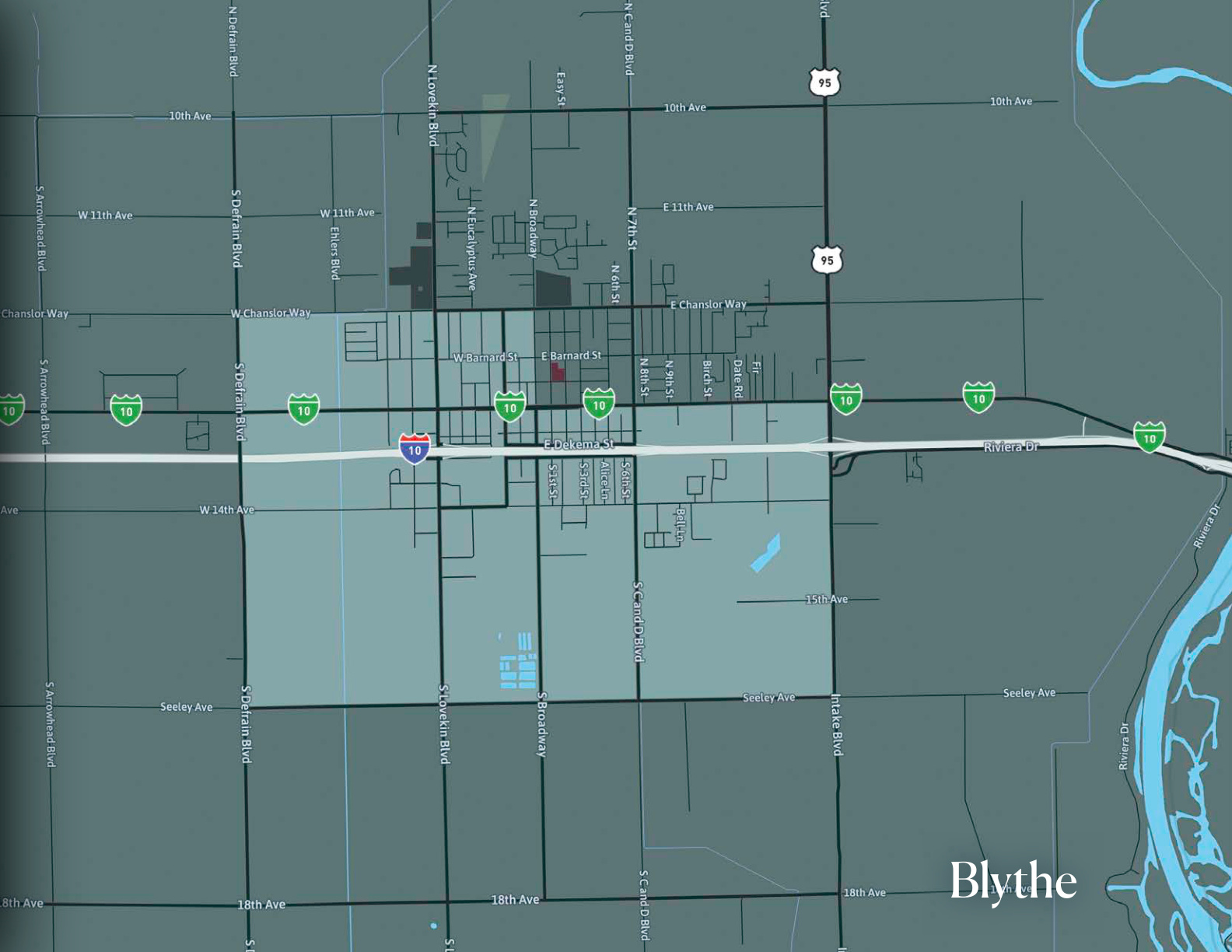
The largest section of the prospectus profiles nine unincorporated focus areas—each with demographics, household statistics, retail leakage data, and a narrative on why that zone merits investment. From Home Gardens adjacent to Corona, to Highgrove near Riverside’s Innovation District, to Mead Valley logistics corridors and desert communities at the Salton Sea and Blythe.
Incentives & resources
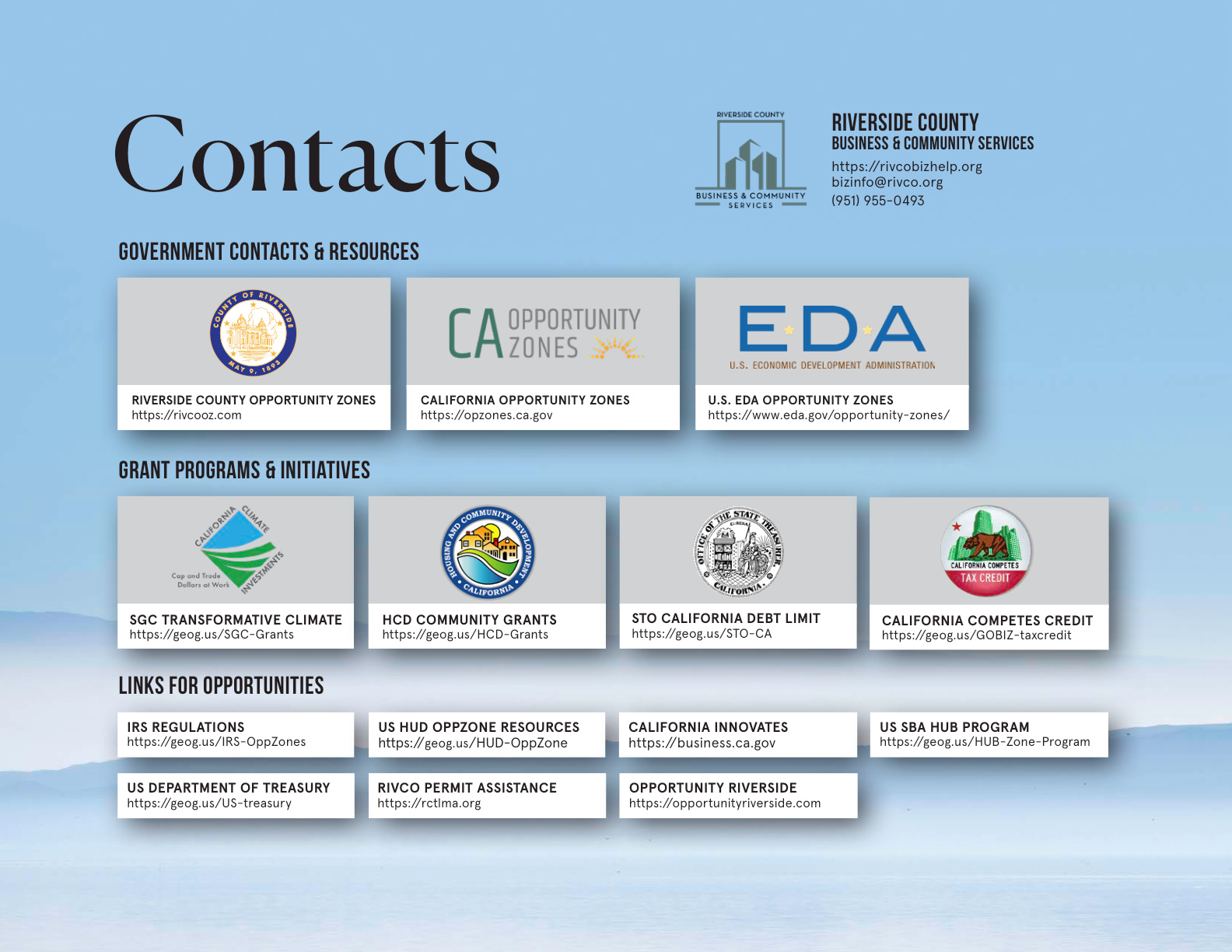
The closing chapters catalog federal, state, and county programs aligned with Opportunity Zone investment—from White House council grants and California Competes tax credits to county workforce training, development impact fee financing, HUBZone support, and the Salton Sea EIFD.

The result
Geogram delivered a comprehensive investor prospectus that connects federal policy to local opportunity—giving Riverside County a credible tool to attract Qualified Opportunity Fund capital into communities that need revitalization, jobs, and equitable growth.
The document remains a reference for economic development outreach through RivCoBizHelp.org, RivCoOZ.com, and OpportunityRiverside.com.